Feeling uneasy when you haven’t checked your phone for a while? You’re not alone—and these tips might help.
Nowadays, we spend more time on screens than ever. With kids learning from home and adults working remotely, our daily screen time has soared.
Smartphones have practically become the soulmates of our generation. They follow us everywhere—on morning walks, during meals, and yes, even to the bathroom.
A January 2021 online survey found that people spend around 3 hours and 15 minutes on their phones each day—not even counting other devices.
Worried? You should be—it’s time to take control of your screen time.
No matter how much we try to convince ourselves that our screen time is reasonable, we can’t escape the reality: dwindling attention spans, poor sleep quality, decreased productivity, and eye strain—not to mention the toll on our mental health.

And if working or studying from home continues—or if this becomes the “new normal”—we need to find sustainable ways to live alongside technology without sacrificing our well-being.
As a mechanical engineer and writer, I rely heavily on electronic devices. On average, I spend seven to eight hours a day on my computer, not even counting my phone usage.
Last year, my nearsightedness worsened significantly. My optometrist advised me that the only way to preserve my vision was to cut down on screen time.
Therefore, it’s important to manage your screen time wisely. Here’s my first tip:
1. Follow the 30-20-10 Rule
Staring at a screen for hours floods your eyes with harmful blue light, damaging retinal cells and raising the risk of conditions like myopia, cataracts, or macular degeneration.
To protect your vision, try the 30-20-10 Rule:
Every 30 minutes, look at something 20 feet away, blink for about 10 seconds, and then get back to work.
This simple practice not only eased my eye redness but also reminded me to prioritize regular breaks. Think of it as a “Pause, Shift, and Gaze” habit to keep your eyes healthy for life.
2. Use Traditional Writing Methods
Most of us are used to typing blogs, essays, or notes on a computer or phone. But writing with pen and paper does more than just reduce screen time—it helps unlock creativity.
Research published in Psychology Today shows that handwriting has a unique connection with the brain when generating new ideas.
I often draft my work on paper first and even use speech-to-text tools later to reduce direct screen exposure. Surprisingly, I’ve become more productive—what once took me 3–4 hours on a computer now takes less than 2 hours with pen and paper. Try it for yourself—you may be surprised.
3. Screen-Free Nights
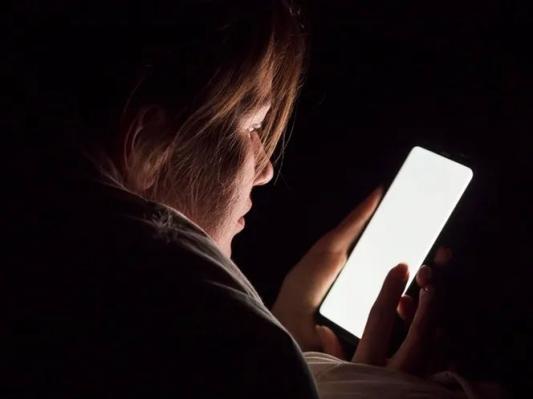
During the pandemic, I found myself glued to my phone late into the night—binge-watching shows, scrolling endlessly, and staying up until 2 a.m. The result? Poor sleep, red eyes, and worsening vision.
My optometrist suggested putting my phone away before bedtime, and I took that advice to heart. Inspired by Lily Tomlin’s quote—
“If you read a lot of books, you’re considered well-read. But if you watch a lot of TV, you’re not considered knowledgeable.”
—I started Screen-Free Nights. I replaced e-books with hardcovers and set a rule to read at least 50 pages before bed. I also discovered audiobooks and podcasts, which are perfect for winding down without screens. The result? Better sleep, less strain, and a healthier bedtime routine.
4. A Daily Device-Free Hour
Screens don’t just affect your health—they affect your relationships too. After a long day, what we often need most is time with ourselves or the people we love.
As writer Regina Brett reminds us:
“Sometimes you have to disconnect to stay connected. Remember when conversations meant eye contact—before phones pulled our attention away from the people in front of us?”
My family and I made a rule: every day, we set aside one device-free hour. Sometimes we go for a walk, play board games, or simply sit together and talk. At first, it felt forced, but soon we realized it was liberating—and it brought us closer than ever.
5. No-Phone Saturdays
Here’s a bigger challenge: try a “No-Phone Saturday.” Don’t worry—you don’t have to give up your phone for the entire weekend. Start with half a day.
In my family, we only use phones to answer calls. We set phone-free hours from 10 a.m. to 12 p.m. and 3 p.m. to 5 p.m. Anyone caught breaking the rule has to do extra chores. It’s fun—and it works!
It’s even more effective when kids start young. As Cynthia Crossley, co-founder of Habyts, says:
“It’s not just about limiting screen time—it’s about teaching children to build good habits in real life while learning to manage technology.”
Instead of scrolling, we bake bread, clean, play Monopoly, ride bikes, or go hiking. And honestly, being out in nature without the internet gave me something priceless: a deeper connection with the world around me.
I’ve kept this list short and simple—because the last thing I want is for you to spend more time on your screen.
Remember: every small step you take away from your devices is a step toward better focus, healthier eyes, deeper sleep, and more meaningful connections.
The question is—are you ready to reclaim your time, your health, and your life from your screens? The challenge starts now.